Breathwork has moved from the periphery of wellness culture into clinics, retreat centers, and private practices across Canada. Clients are no longer only seeking mindfulness or meditation, they are asking for somatic methods that can unlock stuck patterns, complete stress responses, and support trauma processing. Holotropic approaches sit at the heart of this demand, partly because they offer a clear map: intensified breathing, evocative music, and an arc that can safely surface deep material. If you are considering breathwork training in Canada, particularly online options that include holotropic methods, the landscape is both promising and complex.
I have facilitated and mentored in programs where a single weekend changed someone’s trajectory, and I have also seen the pitfalls of quick certifications. The right pathway balances lineage and innovation, personal process and clinical rigor. It also respects Canadian realities: provincial differences in regulation, health and safety standards, and a mental health system that is understaffed, which means facilitators often become first responders for big emotions. This guide aims to help you choose wisely and prepare for real-world practice.
What “holotropic” means in practice
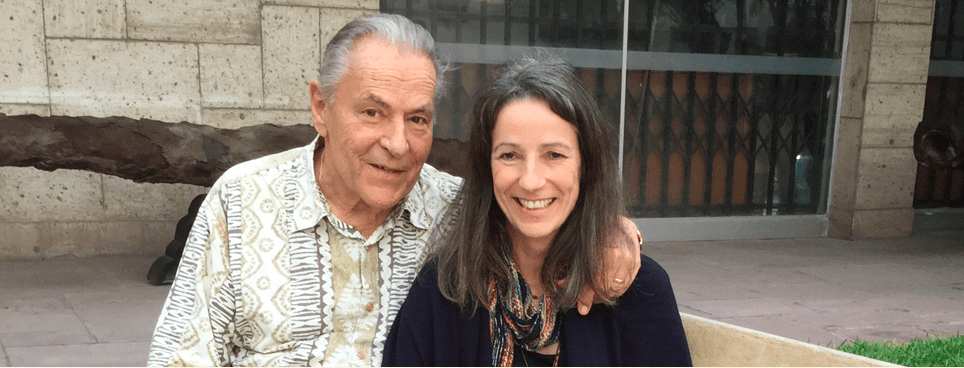
Holotropic was coined by Stanislav and Christina Grof to describe a movement toward wholeness. Holotropic Breathwork emerged from their transpersonal psychotherapy research and has typically required in-person group contexts with a sitter model, carefully curated music, and optional bodywork to complete somatic releases. The holotropic breathing technique itself involves accelerated, connected breathing, usually through the mouth, guided by music that moves through activation, peak, and integration. Sessions can last two to three hours, with robust preparation and debrief.
In Canada you will find trainings that follow the Grof lineage and others inspired by it, often labeled as transpersonal breathwork, integrative breathwork, or simply holotropic-informed methods. Purists will argue that official Holotropic Breathwork training occurs through Grof-affiliated organizations with specific requirements and in-person modules. That is accurate. At the same time, many Canadian facilitators practice legally and ethically using holotropic principles woven into trauma-aware, somatic frameworks that can be trained online or in hybrid formats.
If you plan to advertise Holotropic Breathwork specifically, verify trademark and lineage requirements with the relevant training body before you commit. If your aim is holotropic breath as a principle, most breadth-oriented programs can equip you to deliver safe, deep sessions that honor the core of the method while fitting an online or hybrid practice.
Who tends to thrive in breathwork training
I see three profiles succeed repeatedly. Mental health clinicians, who add breathwork to their scope with clear boundaries, tend to attract complex clients and stabilize them well. Movement teachers and bodyworkers, like yoga therapists and RMTs, often have the somatic literacy to notice subtle shifts and intervene kindly. Peer supporters and coaches with excellent relational skills can hold spacious, nonclinical sessions and refer out responsibly when needed.

Each arrives with strengths and blind spots. Clinicians sometimes over-structure sessions and miss the archetypal or imaginal layer. Somatic practitioners may underestimate the power of trauma reactivation online. Coaches must learn to anchor consent, scope, and referral pathways. A strong curriculum makes these edges explicit and gives you drills, supervision, and ethics to work through them.
The Canadian context: regulation, liability, and scope
Breathwork is not a protected title in Canada, but the activities around it can cross into regulated domains. Psychotherapy is regulated in provinces such as Ontario and Quebec. If a session includes diagnosis, treatment of mental disorders, or techniques reserved for regulated professionals, you need the relevant license. Most breathwork facilitator training in Canada teaches a wellness or educational frame that avoids clinical claims.
Professional liability insurance is available through Canadian associations that cover complementary health practitioners. Insurers may ask for your training hours, curriculum details, and scope. If you plan to offer breathwork for mental health outcomes, expect closer scrutiny. In my experience, policies that cover wellness facilitation require a minimum number of supervised hours and documented safety protocols, especially for online practice.
Tax and business basics matter too. If your revenue crosses the GST/HST registration threshold, you may need to collect and remit. Provinces vary in rules around home-based wellness businesses, so check municipal bylaws and provincial guidance.
Online, hybrid, or in person: what works and why
Online breathwork training Canada programs expanded after 2020 and they will remain. Hybrid models, with online theory and in-person practicums, are increasingly common. Fully online pathways can be effective for foundational content: anatomy of breathing, nervous system education, music curation, screening and intake, session sequencing, and integration skills. Online practicums work when they model the constraints of telehealth: clear camera framing, emergency protocols, and a local support plan for each client.
The limitations are real. In-person group intensives teach you to read the room, move with a co-facilitator, deliver grounded bodywork, and navigate surprises. I have seen facilitators who trained exclusively online freeze the first time they heard a client wail on the floor of a studio, even though they had handled big catharsis on Zoom. The resonance of a shared soundscape, the unpredictability of a dozen nervous systems, and the ethics of touch, all land differently in person.
If you choose an online certification, build in at least one in-person retreat or apprenticeship weekend within the first year of practice. If that is impossible, seek local mentorship and start with one-to-one or very small groups online, then grow to larger circles only after you have a track record.
What a sound curriculum includes
Quality programs, whether general breathwork certification Canada or holotropic breathwork training specifically, tend to share core elements. Expect between 150 and 350 hours over 4 to 12 months, including live instruction, self-study, practice sessions, supervision, and assessment. The variations are mostly in lineage, emphasis, and assessment rigor.
Foundational modules usually cover respiratory physiology and biochemistry, including how hypocapnia shifts blood pH and can induce tetany or paresthesia. Good instructors demonstrate how to pace breath to avoid spiraling into panic. Trauma literacy includes polyvagal theory, titration versus flooding, and reconsolidation windows. Ethics and scope define what you can and cannot promise, how to give plain-language contraindication briefings, and how to refer.
Music and set design matter more than newcomers expect. Holotropic frameworks rely on a carefully shaped arc of sound. Learn to build playlists that do not only match tempo, but also cultural sensitivity and lyrical content. Practice session architecture goes beyond the technique. How you open the space, the words you choose in pre-brief, the way you anchor time, and how you signal choice will influence outcomes as much as the breathing pace.
Finally, programs worth your time require case studies and supervision. Ten to twenty documented sessions with feedback is a common benchmark. Stronger programs ask for video submissions, detailed reflections, and at least two supervisory calls where you discuss edge cases, such as when a client reports a traumatic memory mid-session, or when dissociation flatlines the process.
Holotropic-adjacent and complementary pathways
Holotropic is one stream. Integrative breathwork, biodynamic breathwork, Transformational Breath, Clarity Breathwork, and Conscious Connected Breath all appear in Canada. Many are holotropic in spirit, even when they diverge in technique or length of sessions. They tend to emphasize connected breathing patterns, evocative music, and a body-centered arc, sometimes with self-touch or facilitated bodywork.
The field is also bumping up against psychedelic therapy training Canada. Some therapists add breathwork to prepare clients for legal psychedelic-assisted psychotherapy, for example with ketamine under medical supervision, or to support integration after psychedelic experiences abroad. Breathwork can evoke nonordinary states without substances, but it can also reactivate psychedelic content. That is useful when it is intentional, challenging when it is not. If you work near psychedelic spaces, learn cross-competencies: consent and boundaries, medical screening, and integration protocols.
Safety protocols you will actually use
Contraindications are not a formality. A non-exhaustive list includes significant cardiovascular disease, uncontrolled hypertension, glaucoma, retinal detachment, a history of seizures, pregnancy, recent major surgery, and acute or unstable psychiatric conditions like psychosis. Some programs allow participation with physician clearance and modified techniques. Use your judgment and your insurer’s requirements.
Screen for trauma history and current stability. Ask about panic attacks, dissociation, sleep, and substance use. For online sessions, collect an emergency contact and verify that your client has safe privacy and a charged phone. Establish a word-based or hand-signal stop. Keep a recovery plan ready: slowing breath through the nose, lengthening exhale, orienting to the room, sipping water, pressing the feet into the floor, and naming five objects.
In groups, set participation agreements that include no unsolicited touch, confidentiality, and self-responsibility. If you offer bodywork, get explicit consent each time, narrate your movements, and have a co-facilitator track the room while you engage physically. When a release escalates, reduce volume in the music, cue the exhale, and keep your own breath slow. Most situations de-escalate if you keep your voice steady and return the pace to the client.
A day inside an online training practicum
In one of my cohorts, we started the morning with a short practice session where each trainee facilitated a 20-minute arc for a peer under observation. The prompt was to work with a client who fatigued early. We saw a dozen variations. One trainee used percussion to nudge momentum. Another shortened the inhale and offered a vocalized sigh to extend exhale. In feedback, we mapped how small cues flipped effort into ease.
Afternoons focused on case consults. A facilitator described an online client who clenched hands into tetany and panicked. The group dissected it: likely hypocapnia from over-breathing, accelerated by fear. The solution was not to halt the session but to coach nose-only breathing and micro-pauses on the inhale. We practiced language that normalizes the sensation without minimizing distress. No grand theory, just excellent craft.
By evening, trainees designed playlists for specific client intentions: grief, anger, or creative block. The assignment was to avoid cultural appropriation and lyrics in languages you do not understand. We discussed how a single drum track can carry projections, and how to pick neutral containers that support a diverse group without erasing anyone.
Choosing a program without getting lost
Use a short checklist, then trust your body’s yes or no.
- Lineage and scope: Does the program clearly state whether it is holotropic breathwork training, holotropic-informed, or a broader breathwork certification Canada pathway, and what titles you can legally use after graduation? Hours and supervision: Are there at least 150 total hours, with live instruction and 10 to 20 supervised practice sessions? Safety and ethics: Do they teach contraindications, emergency planning for online sessions, and scope of practice relative to Canadian regulations? Assessment: Will you receive specific feedback on real sessions, not just attendance-based certificates? Community and support: Is there post-graduation mentorship, referral networks, or peer groups in Canada?
When you interview programs, ask how they handle a client who dissociates and goes silent on Zoom. The specificity of their response tells you more than a glossy syllabus.
Costs, timelines, and realistic outcomes
Expect a wide range. Many reputable online or hybrid certifications run from 2,500 to 7,500 CAD, depending on length and contact hours. Specialty or lineage-based programs with in-person intensives can exceed 10,000 CAD when you include travel. A basic pathway to practice readiness usually takes 6 to 12 months. If you plan to integrate breathwork into an existing mental health or bodywork practice, you can begin offering contained services sooner, especially in one-to-one settings, while you complete additional supervision for groups.
Income potential varies by market and background. In major Canadian cities, private one-to-one sessions often range from 100 to 250 CAD for 60 to 90 minutes. Group circles can generate more per hour, but they carry higher risk and require room rental, insurance adjustments, and an assistant. Online delivery reduces overhead and increases reach, but conversion depends on trust. Plan a year where you focus on competence and community rather than aggressive scaling.
How online sessions actually flow
For those new to online facilitation, simplicity wins. The structure below mirrors what I teach junior facilitators in their first month of practicum.
- Pre-brief and consent: 10 to 15 minutes to confirm intentions, review contraindications, and agree on stop signals and camera framing. Activation arc: 25 to 45 minutes of guided breathing with curated music, with periodic reminders to soften jaw, lengthen exhale, and choose pace. Descent and rest: 10 to 15 minutes of gentle breathing or silence to allow integration and nervous system settling. Debrief and integration: 15 to 30 minutes to reflect, anchor insights into one or two concrete practices, and confirm aftercare.
Seasoned practitioners will add ritual, creative processing, or journaling. New facilitators should resist the urge to pack too much into the container. Spaciousness is not emptiness. It is an active part of the work.
Cultural humility and land-aware practice
Breath is universal, but containers are not. When working in Canada, acknowledge Indigenous presence and knowledge without extracting or mimicking practices you were not trained to hold. Holotropic and related approaches arise from European and North American transpersonal psychology, not from specific Indigenous lineages. If you use drums or rattles, understand their cultural weight and consider less loaded instruments for public groups. Learn the territorial acknowledgments where you work and invest in local relationships where appropriate.
Language matters too. Some groups prefer the phrase altered states, others prefer expanded awareness or deepened embodiment. Ask, do not assume. Avoid imposing interpretive frames on clients’ experiences, and let meaning emerge.
Integrating with clinical care and psychedelic contexts
If you are a regulated clinician, establish clear pathways between breathwork and therapy. Separate consent forms help clarify when you are operating as a psychotherapist versus a breathwork facilitator. Keep notes distinct if required by your college or insurer. Collaborate with physicians if a client has medical complexity. A brief email exchange about contraindications can prevent problems.
Breathwork pairs naturally with psychedelic preparation and integration, but guard against scope creep. Do not promise outcomes that belong to medical contexts. If clients disclose current or past psychedelic use, screen carefully for destabilization and support simple grounding practices post-session. If you are not trained in psychedelic therapy, partner with someone who is, and stay in your lane.
Holotropic specificity versus broader breathwork facilitator training Canada
If your heart is set on holotropic breathwork training in its formal lineage, expect a multi-year arc with required modules, specific facilitation methods, and often in-person residencies. The benefit is depth, community, and a recognizable standard. The trade-off is less flexibility in online delivery and a slower route to independent practice.
Broader breathwork certification Canada programs tend to be more modular, with online cohorts, rolling admissions, and electives. They can prepare you to work competently in wellness contexts both online and in small groups. The trade-off is variance in rigor. You must vet harder and supplement with mentorship, especially if you plan to hold high-intensity spaces.
Both pathways are legitimate. Choose based on your clients, your temperament, and the kind of rooms you want to lead. Some facilitators complete a general certification to start and pursue lineage-specific training once their practice is stable.
Building a sustainable practice after certification
Graduation is not the finish line. It is permission to begin with humility. Start with a beta phase. Offer a limited number of low-cost or free sessions in exchange for detailed feedback, while your supervisor reviews recordings. Identify your niche through observation rather than branding fantasies. You might discover that you work best with grief, with artists, with new parents, or with executives who need a place to drop the armor.
Document your protocols. Write a one-page safety SOP for online and in-person sessions. Include client screening questions, contraindications, emergency steps, and referral contacts. Keep it updated and accessible to any assistant or co-facilitator.
Invest in your own practice. A facilitator who does not breathe sits on brittle ground. Keep a weekly personal session or peer trade. It sharpens your empathy and helps you spot the difference between your charge and the client’s process.
Finally, track outcomes lightly but consistently. Simple pre-session and post-session check-ins on mood, anxiety, and energy can reveal patterns and help you refine dose and pacing. Over a few dozen clients, you will learn what works in your hands rather than in a manual.
Where breathwork sits in Canada’s healing ecosystem
Breathwork is unlikely to be formally regulated soon, and that gives both freedom and responsibility. It can serve communities that lack access to psychotherapy or prefer embodied routes. It can complement psychotherapy, physiotherapy, and medicine when delivered within scope and with coordination. It can also do harm when rushed, overhyped, or practiced without respect for physiology and trauma.
If you choose the holotropic path, online or hybrid, you are signing up for craft and care. You will learn how to build a music arc that chooses you as much as you choose it. You will practice saying less while your presence says more. You https://fernandoskza488.fotosdefrases.com/canada-s-online-holotropic-breathwork-training-with-trauma-informed-focus will meet people where they are, not where you want them to be. That is the real certification. The paper matters, but the person behind it matters more.
For those ready to begin, start by mapping your goals. Decide whether holotropic specificity or broad breathwork facilitator training Canada aligns with the rooms you want to hold. Confirm that the program’s safety, supervision, and scope match Canadian realities. Then breathe your way through the training, session by session, music track by music track, until your nervous system knows what your certificate will say: you can hold the inhale, and you know how to land the exhale.

Grof Psychedelic Training Academy — Business Info (NAP)
Name: Grof Psychedelic Training AcademyWebsite: https://grofpsychedelictrainingacademy.ca/
Email: [email protected]
Hours:
Monday: 9:00 AM – 5:00 PM
Tuesday: 9:00 AM – 5:00 PM
Wednesday: 9:00 AM – 5:00 PM
Thursday: 9:00 AM – 5:00 PM
Friday: 9:00 AM – 5:00 PM
Saturday: Closed
Sunday: Closed
Service Area: Canada (online training)
Map/listing URL: https://maps.app.goo.gl/UV3EcaoHFD4hCG1w7
Embed iframe:
Socials (canonical https URLs):
Facebook: https://www.facebook.com/people/Grof-Psychedelic-Training-Academy/61559277363574/
Instagram: https://www.instagram.com/grofacademy/
LinkedIn: https://www.linkedin.com/company/grof-psychedelic-training-academy/
https://grofpsychedelictrainingacademy.ca/
Grof Psychedelic Training Academy provides online training for healthcare professionals and dedicated individuals in Canada.
Programs are designed for learners who want education and structured training related to Grof® Legacy Psychedelic Therapy and Grof® Breathwork.
Training is delivered online, with information about courses, cohorts, and certification pathways available on the website.
If you’re exploring certification, you can review program details first and then contact the academy with your background and goals.
Email is the primary contact method listed: [email protected].
Working hours listed are Monday to Friday from 9:00 AM to 5:00 PM (confirm availability for weekends and holidays).
Because services are online, learners can participate from locations across Canada depending on program requirements.
For listing details, use: https://maps.app.goo.gl/UV3EcaoHFD4hCG1w7.
Popular Questions About Grof Psychedelic Training Academy
Who is the training for?The academy describes training for healthcare professionals and dedicated individuals who want structured education and certification-related training in Grof® Legacy Psychedelic Therapy and/or Grof® Breathwork.
Is the training online or in-person?
The academy describes online learning modules, and also notes that some offerings may include in-person retreats or workshops depending on the program.
What certifications are offered?
The academy describes certification pathways in Grof® Legacy Psychedelic Therapy and Grof® Breathwork (program requirements vary).
How long does it take to complete the training?
The academy indicates the duration can vary by program and cohort, and notes an approximate multi-year pathway for some certifications (confirm current timelines directly).
How can I contact Grof Psychedelic Training Academy?
Email: [email protected]
Website: https://grofpsychedelictrainingacademy.ca/
Facebook: https://www.facebook.com/people/Grof-Psychedelic-Training-Academy/61559277363574/
Instagram: https://www.instagram.com/grofacademy/